

BeeX adapted its underwater inspection approach across a complex oil-and-gas campaign, including an eight-legged jacket that pushed beyond conventional inspection access.
Offshore subsea inspection is rarely a one-size-fits-all exercise. Jacket structures vary in size, geometry, and the components they support. Deployment conditions differ from platform to platform, and inspection teams must balance coverage, data quality, and time offshore.
For BeeX, these challenges came together in its largest oil and gas project to date: a campaign spanning six offshore assets, completed using a single A.IKANBILIS. The work included drilling, riser, telecom, vent-system, and petroleum drilling well structures, each with its own configuration and operational requirements.
The engagement followed an earlier 2025 pilot inspection that helped establish the client’s confidence in BeeX’s autonomous underwater inspection capabilities. Having demonstrated its ability to inspect a complex jacket structure, BeeX progressed to a larger commercial deployment involving multiple assets, varied structural configurations, and a shared inspection scope.
Across the six assets, A.IKANBILIS inspected 27 jacket legs, more than 600 anodes, 26 conductors, and 10 risers, alongside caissons, J-tubes, riser guards, clamps, pile sleeves, and other structural appurtenances. The campaign’s scale was matched by the complexity of the structures themselves.
One result stood out: BeeX completed the inspection of an eight-legged drilling platform with 20 conductors in seven operational days, against a ten-day allocation. The team also captured visual inspection data from conductor sections that conventional ROVs had reportedly been unable to access during previous inspections.
Although each structure had a different configuration, the campaign followed a consistent inspection scope. Across the drilling platform, riser, telecom, drilling-well platform, vent system asset, and unmanned platform assets, A.IKANBILIS gathered:
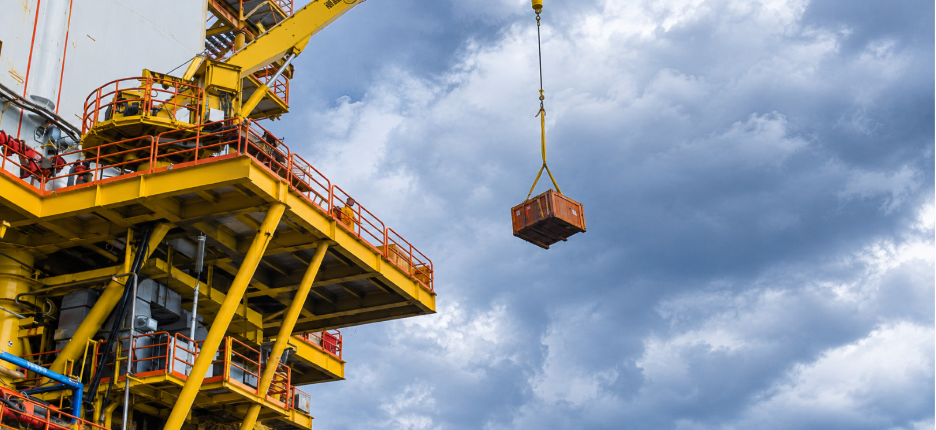
Using a Platform Supply vessel, BeeX mobilized the drone operations team and a CSWIP 3.4U inspector to the project site, supported by the client’s crane operator, rigger, and client representative to each asset. Only one pallet of BeeX equipment was lifted onto the launch and recovery platforms, keeping operations lean.
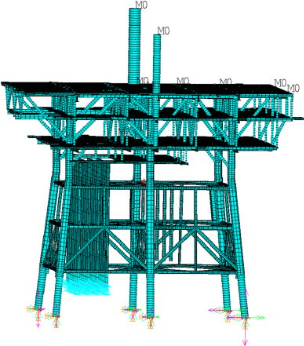
Pre-deployment, BeeX uploaded a 3D model of each asset to plan and created a flight path for the autonomous drone into Sambal Xplorer, BeeX’s mission control software.
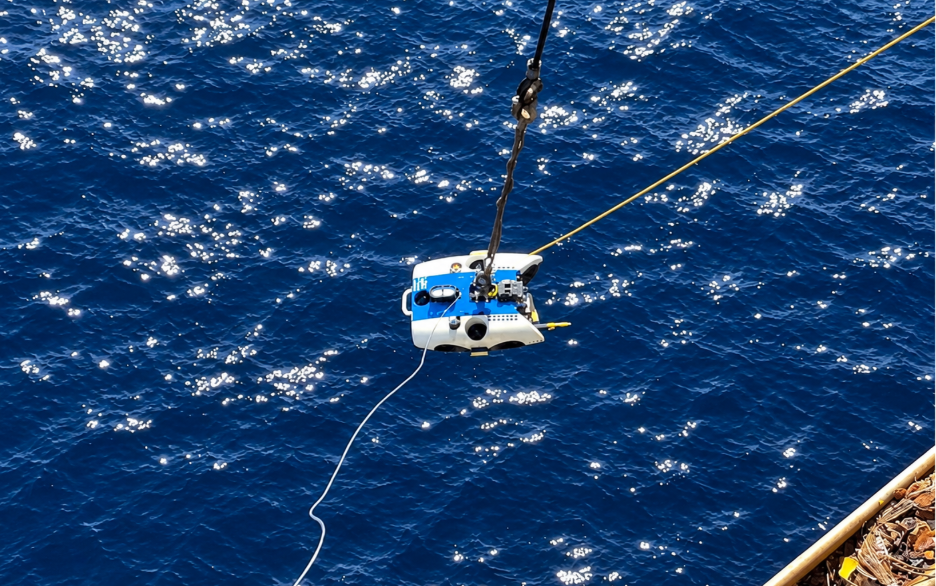
Once configured, a single drone A.IKANBILIS was deployed into the water. Depending on operational viability, A.IKANBILIS was launched and recovered though a portable crane, a platform crane operated by a certified operator, or crane atop a vessel for the vent system asset, where radiation conditions restricted personnel deployment from the platform. This campaign validated A.IKANBILIS’ operational flexibilities for various Launch and Recovery mechanisms.
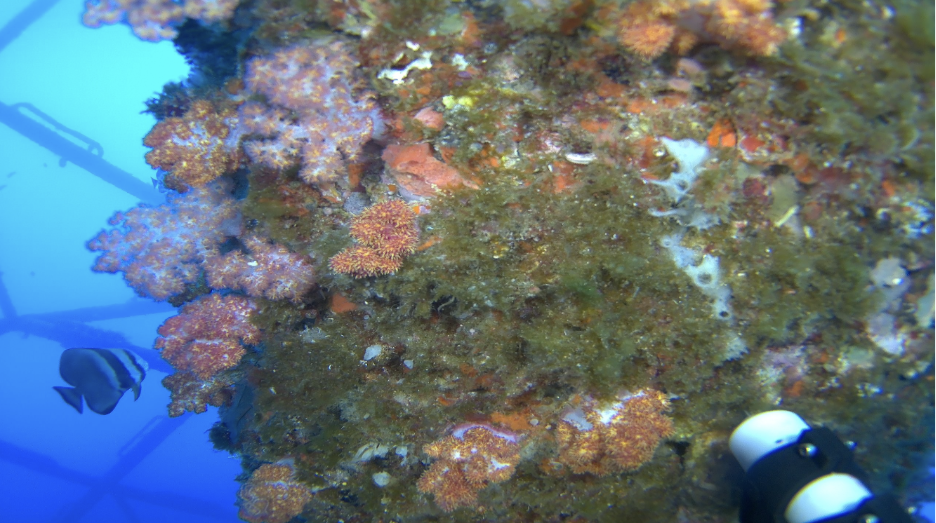
A.IKANBILIS efficiently finished GVIs on platform asset jackets. Tethered, the drone provided a continuous high-fidelity delivery of sonar and visual data during the inspection, giving topside operators comprehensive situation awareness over each dive. To preserve data quality, A.IKANBILIS kept a steady hovering position to maximize sensor data pick-ups and control over stabs, all while fighting currents up to 0.6 knots at 50.77 to 71 meters of depth. This stability made inspections between tight spaces possible, especially amidst interlaced horizontal and diagonal braces.
The drone’s capability to flexibly switch between operating modes to actual underwater conditions also helped the team best adapt inspection to each asset’s environmental and structural conditions. Autonomous GVI missions were used as often as possible, speeding up and standardizing the inspection process. However, on one unmanned platform, the team switched to manual piloting to account for concentrated fish activity within the area.
Apart from visual data, A.IKANBILIS gathered cathodic protection data on pre-determined areas by the client, measuring the potential relative voltage of anodes to verify if they sit within the protective electrochemical criteria against corrosion.
Unique to this scope of work included an eight-legged drilling platform, presenting a particularly demanding inspection environment and the most complex jacket structure that BeeX would inspect to date. Apart from its eight-leg structure, the structure had 20 conductors situated in the middle of the drilling platform, which created restricted spaces for inspection of movement and potential tether-entanglement concerns.
BeeX’s hovering drone architecture was put to the test. The drone’s hovering design was designed to have the drone adjust in real-time to currents from multi-directions for stabilization without any active piloting needed. With the real-time flight path on Sambal Xplorer paired with the drone’s hovering capabilities, A.IKANBILIS successfully inspected the tight conductor area, moving in and out of tight spots and averting cases of entanglement, capturing GVI data on the assets.
The project team reported that the client was very pleased to receive GVI data for the first time from the conductor area, as previous inspection methods and technologies had failed. Moreover, they were impressed by the completion of the 8-legged jacket in seven operational days against a ten-day allocation.

After each daily deployment, the BeeX team uploaded daily geo-referenced reports of visual and sonar snapshots of anomalies that could be measured and reviewed on the Sambal Portal. To ensure quality, the 3.4U inspector reviewed and vetted the reports before submitting the previous day’s data to the client each night.
Together, the efficient inspection workflow, daily reporting, and onsite review supported the swift delivery of inspection data across the six-asset campaign, crucial for awareness over critical and secondary areas of concern.
In this project, A.IKANBILIS covered a full oil and gas hub with different geometries, components, and operating conditions in a singular month.
The client’s subsequent request for a proposal covering seven more jackets presents an opportunity to extend the approach to additional assets.
For BeeX, the campaign represents a significant step in applying autonomous underwater inspection at a larger commercial scale: combining repeatable inspection processes with the flexibility to respond to the specific requirements of each offshore structure.
BeeX designs and operates a fleet of fully autonomous underwater drones aimed at transforming underwater capabilities at scale.
Where traditional inspection requires teams of specialists and large supporting vessels offshore, BeeX drones operate entirely on their own. Our approach delivers industry-grade underwater data at a fraction of traditional costs and project schedules, consistent and repeatable across any environment.
With global deployments across complex underwater conditions, 14 years of proprietary subsea data, the largest fleet of operational underwater drones, and drone acquisition contracts with the Singapore Ministry of Defence, we're leading the most advanced end-to-end solution for underwater inspections, and the most scalable operating model in the industry.
Whether you're in offshore energy, defense, or coastal infrastructure, choosing autonomy starts with a conversation.
Transforming Underwater Capabilities at Scale
All Rights Reserved © BeeX Pte. Ltd. 2026


