
The client is an international energy company with a long history, with assets offshore and on land to support the trading of liquefied natural gas, refining of oil products, and operating of service stations.
The client required an assessment of the anchor piles on the seabed before reinstalling a new Single Buoy Mooring (SBM) body. The original SBM buoy had been removed, and verifying the structural integrity of the anchor piles was critical to ensuring they could support the new installation.

Before turning to BeeX, the client engaged a conventional survey company to locate six sets of anchor piles and determine their coordinates.
The ultimate goal was to use this information to measure the thickness of the pad-eye and cheek plates on the anchor chains—critical components in assessing the structural integrity of the anchor piles.
Despite commissioning multiple survey trips and paying for various methods, the client still did not get the useful information they needed. The survey company had to deploy different techniques separately, including magnetometers and side-scan sonar, in an attempt to locate the anchor piles. Even with these efforts, they struggled to pinpoint exact locations or determine whether the piles were buried or still protruding from the seabed.
BeeX believes that this is likely due to the distance of the vessel mounted sensors, which could be too far away from the small objects to detect it clearly.
Moreover, the survey company was unable to offer a safe and effective solution for measuring the pad-eye and cheek plate thickness, leaving the client without the critical data they needed.
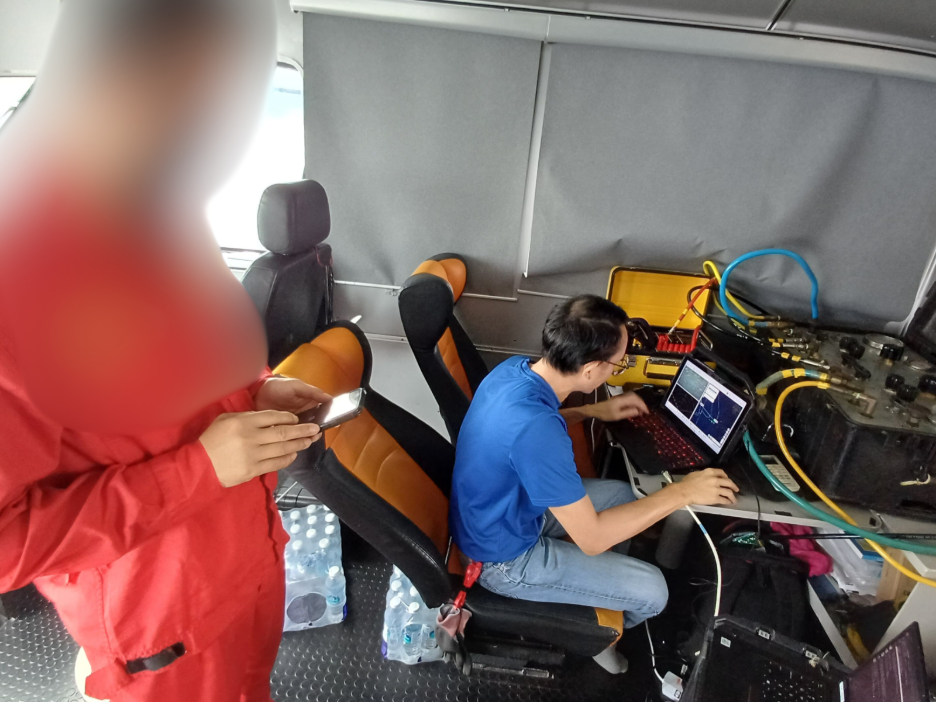
BeeX deployed the A.IKANBILIS drone equipped with stereo-cameras to conduct a high-precision inspection. Leveraging the autonomous inspection’s advanced underwater geo-positioning and navigation capabilities, we successfully verified the presence and positioning of the anchor piles based on as-built drawings. The drone initialises with a GPS position on the surface, and seamlessly switches over to Inertial Navigation underwater. The drone was then able to go very close to the seabed, at less than 0.5m away to inspect the small objects.

For anchor piles still protruding from the seabed, we utilized the stereo cameras to generate a highly accurate 3D reconstruction, capturing the pad-eye and cheek plates with millimetric precision.
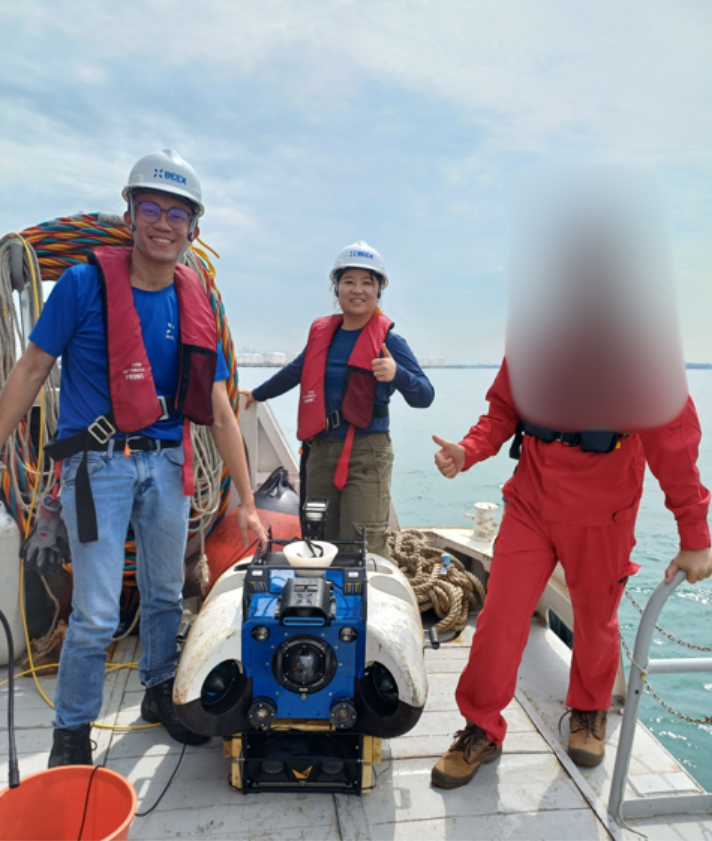
With BeeX’s survey and inspection data, the client finally had the necessary insights to assess the condition of the anchor piles and determine the next steps for reinstalling the SBM. The accurate 3D models provided a level of detail that traditional vessel-based survey methods could not achieve.
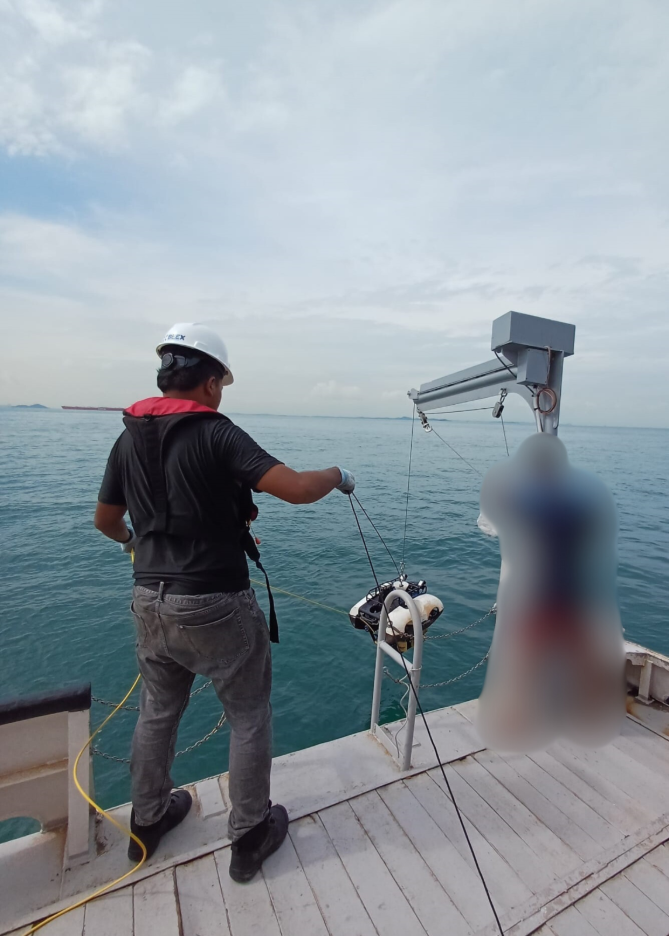
This project demonstrated that autonomous-based inspections can outperform conventional vessel surveys in scenarios requiring precise positioning and detailed 3D modeling of subsea structures. The success of this operation further validated the advantages of autonomous solutions for complex underwater inspections.
Whether you're in offshore energy, defense, or coastal infrastructure, choosing autonomy
starts with a conversation.
Transforming Underwater
Capabilities at Scale
All Rights Reserved © BeeX Pte. Ltd. 2026