
This client company is a manufacturer and refiner of fuels, petrochemicals, and lubricants, providing critical energy for businesses and construction on a global scale. They own a few open-water tanks used for the treatment of crude oil storages. However, accumulations of sludge residuals from filtration and exposure to environmental elements naturally occur.
Left uninspected, sludge can alter the quality of water and reduce the tank’s capacity to hold water.
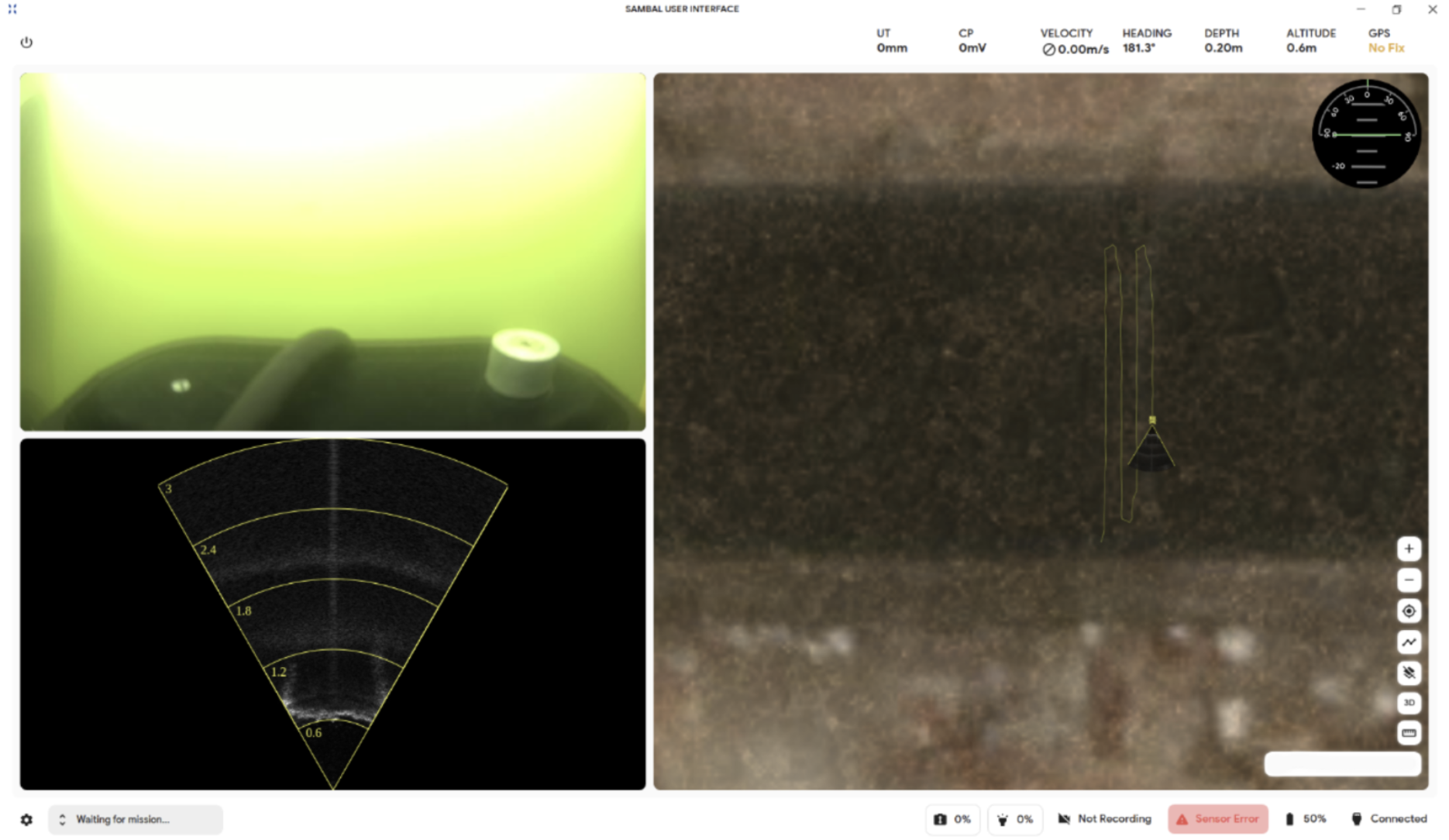
At an open-water tank inspection, BeeX:
Sludge measurements are critical for the Company’s awareness for several reasons: to aid their understanding of an optimal time to perform desludging on their new open-water tank, and for them to pay desludging contractors more accurately.
Previously, the Company would have two workers row a small boat through the tank and use sticks to manually measure sludge contents in select areas. But this method was not only inefficient and inaccurate for sludge calculations, but also dangerous for workers due to prolonged exposure to the chemical plant.
Searching for better methods, the Company reached out to BeeX for a robotic inspection.
Within two hours, A.IKANBILIS reports helped the BeeX team calculate the sludge content relative to the total water body depth and identify georeferenced areas with the highest concentrations of sludge. Moreover, the team found a strong correlation between pH and sludge volume, suggesting that higher pH levels accompanied the presence of greater sludge volumes.
In the sample bathymetric survey above, red zones show the highest points of accumulated sludge, with blue zones showing areas with the least sludge. A similar bathymetric survey and pH plot showing sludge depths and differing pH levels was generated in BeeX’s cloud reporting software Sambal Portal.

Overall, using Autonomous Underwater Vehicles, such as BeeX’s A.IKANBILIS, for sludge inspections empowers O&M managers to make informed decisions on jobs needed for asset protection and cost management. By comparing sludge volumes year over year, accumulation rates can be used to predict when another desludging job should be done.
Meanwhile, autonomous robots mitigate human exposure to hazardous chemicals in inspection tasks at chemical plants. This methodology ensures the safeguarding of assets and the well-being of the workforce, heralding a transformative era characterised by enhanced safety and operational efficiency.

The right drone for your mission starts with a conversation.
Singapore Office: ____
Singapore Headquarter
38 Ang Mo Kio Industrial Park 2#01-01, Singapore 569511
London Office
85 Great Portland StreetFirst Floor, London W1W 7LT
Germany Office
Alter Hafen S 3, 18069 Rostock, Germany