
This client company is a leading petrochemical and refining hub in Asia, processing about a few hundred thousand barrels of crude oil per day. Leveraging Singapore’s strategic location as a global trading hub, it produces oil for domestic consumption but focuses on transferring significant amounts of crude oil with tankers for international export.
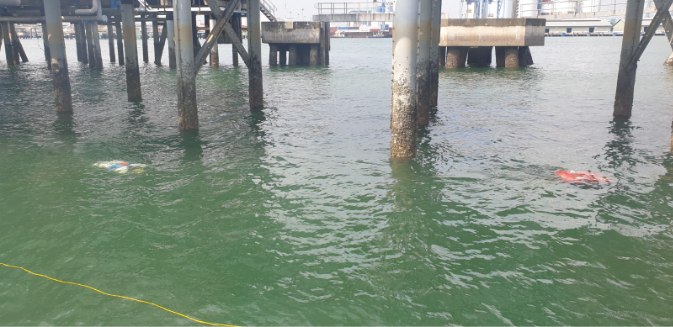
Oil transfers constitute a pivotal operation for this client company, characterized by the daily arrival and departure of tankers at the refinery. The robustness of jetty infrastructures is paramount to facilitate the smooth transfer of crude oil from their refining plant to moored vessels. However, jetty piles are susceptible to corrosion and structural flaws from exposure to seawater and the physical stresses exerted from mooring.
Unchecked and unattended, piles may weaken, posing heightened risks at the worksite and escalating operational costs for repair and maintenance. Consequently, conducting pile assessments is imperative.
Therefore, in pursuit of obtaining robust data on pile conditions, BeeX was subcontracted for the promising capabilities of autonomous drone A.IKANBILIS.
The BeeX team used A.IKANBILIS to perform three non-destructive testing (NDT) methods: visual testing, ultrasonic testing, and cathodic protection testing.
First, pile conditions were documented using an HD camera, capturing both video footage of the mission and detailed snapshots of areas of interest.
Subsequently, ultrasonic testing probes mounted on A.IKANBILIS facilitated the acquisition of thickness readings. These probes determined pile thickness by measuring the time it took for an ultrasonic wave to return to the probe from the opposite end of the pile.
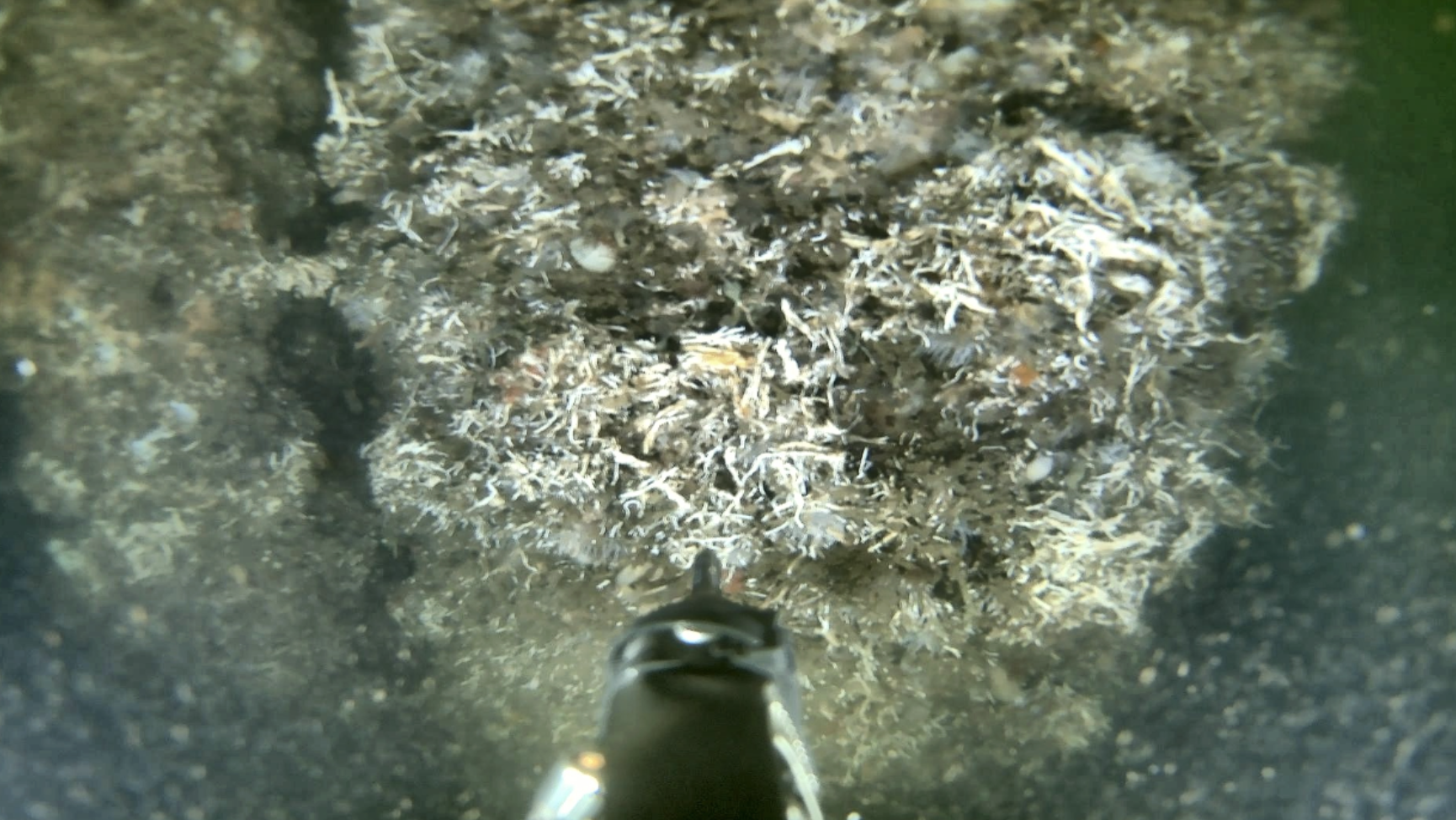
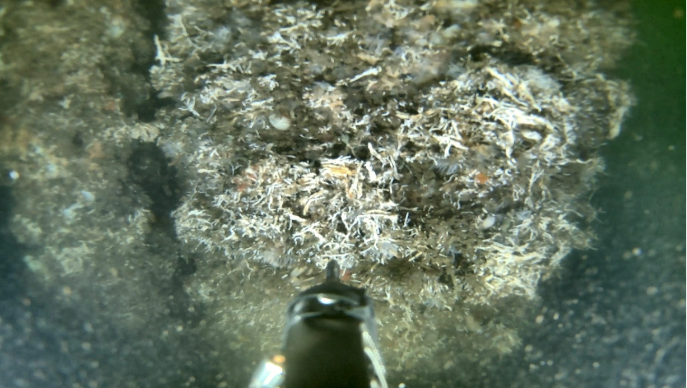
To ensure precision, marine growth obstructing accurate measurement was removed by a supporting Remotely Operated Vehicle, ensuring optimal probe contact with metal pile surfaces.

Lastly, the assessment of corrosion resistance was conducted through cathodic protection testing. Equipped with a cathodic test probe, A.IKANBILIS gauged the voltage levels of inspected piles. These readings provided insights into the remaining zinc content in sacrificial anodes, commonly installed to divert the corrosion process from the steel piles. Multiple readings per pile were executed to guarantee the accuracy of acquired data points.
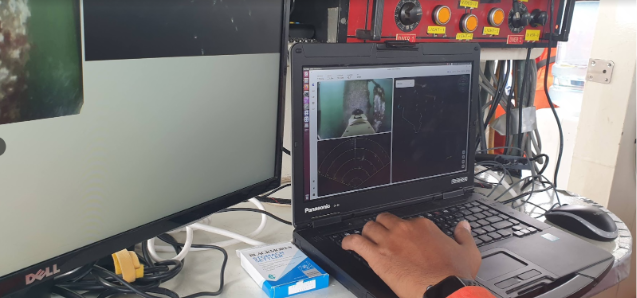
Real-time data of pile conditions were presented on Sambal User Interface, a BeeX application offering a comprehensive overview of A.IKANBILIS' operations, surroundings, and data inputs.
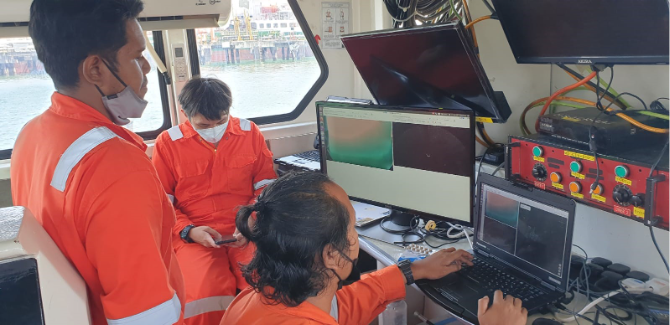
Following deployment, the gathered data was seamlessly uploaded to Sambal Portal, BeeX’s data reporting cloud. This platform afforded the client company extensive insights into the integrity of the assessed piles, facilitating informed decision-making for proactive maintenance strategies.
Ensuring Integrity Below the Surface: BeeX's Innovative Approach to Underwater Infrastructure Inspection
As structures mature, regular inspections to validate their load-bearing capacities become imperative. While assessments of industrial structures are more commonly observed, the significance of inspecting underwater infrastructures cannot be understated.
Non-destructive testing (NDT) of underwater structures emerges as a highly advantageous and cost-efficient approach, as it avoids permanent damage or potential structural compromise. The insights garnered from these tests facilitate proactive maintenance measures, thereby minimizing future repair expenses, safeguarding critical infrastructures, prolonging asset lifespan, and mitigating risks to onsite personnel.
BeeX adeptly meets this demand by offering sophisticated NDT services with autonomous inspection drone A.IKANBILIS. With BeeX’s cutting-edge technology and extensive expertise, clients can confidently ensure the integrity and longevity of their underwater infrastructures, ultimately fortifying workplace safety protocols and optimizing operational costs.
Whether you're in offshore energy, defense, or coastal infrastructure, choosing autonomy
starts with a conversation.
Transforming Underwater
Capabilities at Scale
All Rights Reserved © BeeX Pte. Ltd. 2026